Faculty Fellowship Series
Faculty Fellowship Supports Hands-On Field Science
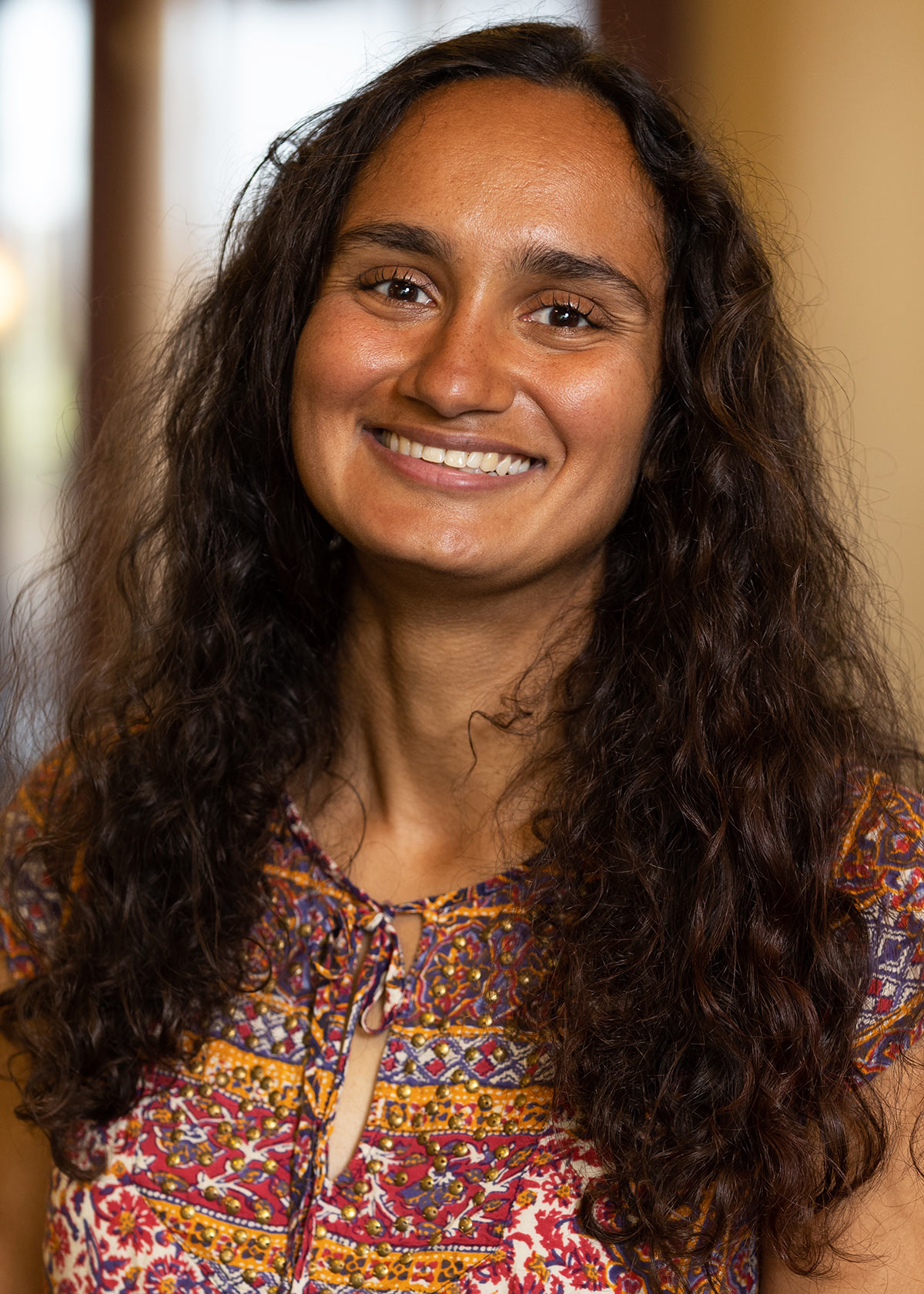
Curiosity and inquiry are the foundation of science, and Hima Hassenruck-Gudipati, Assistant Professor of Environmental Science and Policy, exemplifies this through her passion for teaching geology. During an undergraduate trip to the Grand Canyon, Dr. Hassenruck-Gudipati became fascinated by the landscape around her. This spark of interest inspired her to apply her mechanical engineering background to understanding the mechanics of nature.
That inquiry led her to the University of Texas to study floodplain dynamics for her PhD, followed by a postdoctoral fellowship at the University of Minnesota analyzing lake sediment to uncover the historical environmental impacts of land use. Today, her work emphasizes place-based, community-engaged research that addresses real-world environmental challenges.
Now in her second year at SOU, Dr. Hassenruck-Gudipati came to SOU because of its strong emphasis on faculty-student relationships and its supportive academic community. As a core faculty member in the ESPS program, Dr. Hassenruck-Gudipati is providing hands-on mentorship for the next generation of environmental scientists and leaders.
Stepping into her first full-time faculty position, Dr. Hassenruck-Gudipati has embraced the campus community, reflecting, “I’ve really enjoyed all of the colleagues I’ve made here and the opportunity to work with students.”
Within the Environmental Science, Policy, and Sustainability (ESP) program, Dr. Hassenruck-Gudipati identifies as the resident geologist and hydrologist. “In the environmental science program, I really think about those non-living things on the landscape and how they can support all of the living beings. That’s kind of my role,” she explained. She often jokes with her students that if they need help identifying a bird or a plant species, they have come to the wrong person.
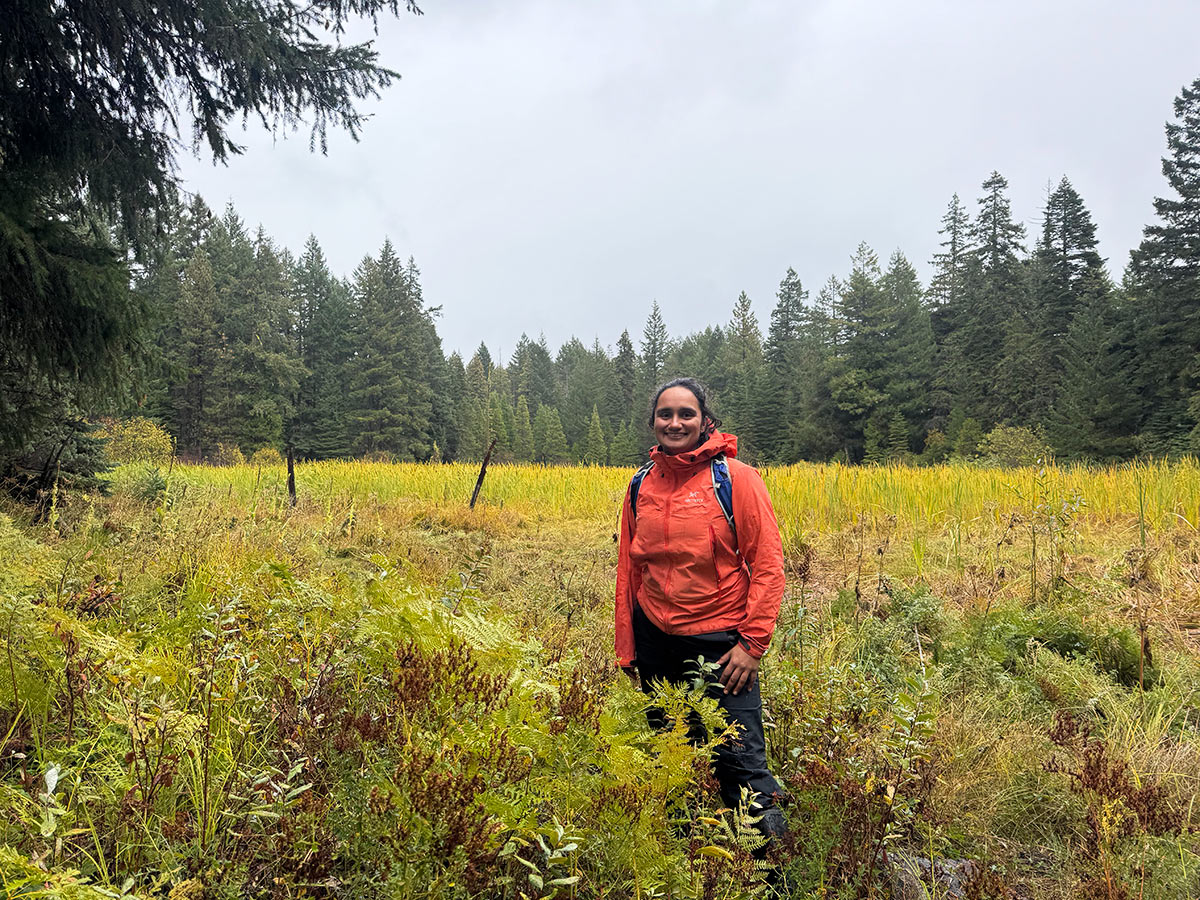
Dr. Hassenruck-Gudipati in the field.
Dr. Hassenruck-Gudipati brings this earth-systems perspective into the classroom through teaching the introductory environmental science course on campus, where she guides students through three spheres: water systems, weather and climate processes, and tectonics and landforms.
Her research momentum has continued to grow because of two prestigious appointments: a donor-supported Faculty Fellowship and a fellowship with the Institute for Applied Sustainability (IAS). Both are supported by generous gifts from private and corporate donors. For her Faculty Fellowship, she is tackling critical water availability questions facing the Rogue Valley. Her project focuses on mountain meadows—key natural features that store water in high-altitude landscapes—to investigate how water moves through them and how long it stays.
“Where is our water, how long is it going to be around, and what are the stressors to our water systems here?” Dr. Hassenruck-Gudipati asks. The project bridges her dual expertise in hydrology and geology by examining how these meadows form on old landslide deposits, looking directly at the geological materials that host these natural reservoirs.
In tandem with her field research, her IAS Fellowship is dedicated to delivering actionable data to the local community. Dr. Hassenruck-Gudipati is collaborating with students to build a user-friendly web application that consolidates streamflow, snowpack, and land-use data into a single interface. This tool will provide technical support to the Inland Rogue Resiliency Working Group as they prepare for a place-based planning grant with the Oregon Water Resources Department. The initiative includes an outward-facing component where Dr. Hassenruck-Gudipati and her students will guide community members and partner organizations on how to interpret and utilize the environmental data.
For Dr. Hassenruck-Gudipati, funding opportunities like these are essential for building her teaching and research at SOU.
“Having the faculty fellowship support was really critical for having money to do research,” she noted. “My research would not be where it is today without this support.”
Her research quickly moved from theory to the field thanks to additional support and student collaboration. Through a STEM Research Experience grant and support from the Friends of the Cascade Siskiyous, Dr. Hassenruck-Gudipati brought on a student researcher to lay out the groundwork for site selection. With additional funding and guidance from Biology Emeritus Professor Dr. Michael Parker, the team established a primary monitoring site at Parsnip Lakes, a marsh ecosystem within the Cascade-Siskiyou National Monument. Dr. Hassenruck-Gudipati and her students make monthly field trips to track how water enters, moves through, and leaves the wetland system.
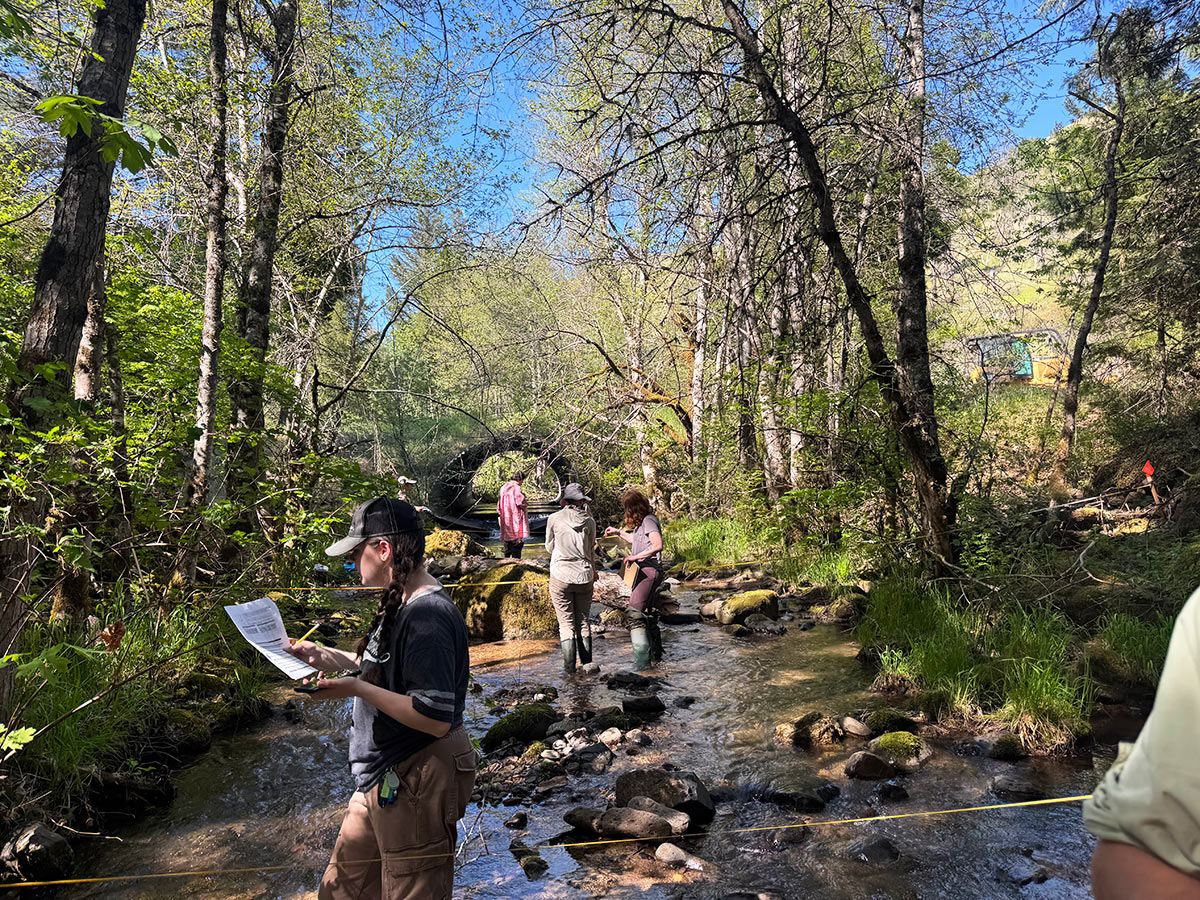
SOU students surveying in the watershed.
Early data reveals an ecosystem that actively buffers temperature and water availability. Backed by her fellowship, Dr. Hassenruck-Gudipati and her student researcher recently presented these early findings at a regional geomorphology conference, which proves her commitment to involving undergraduate students in meaningful field science.
“Thanks to the funding, I was able to take two research students down to UC Davis for an international river science conference,” she added. “While I presented on my PhD research, it was still a fantastic opportunity for all of us to connect with local researchers and see the incredible work happening across the field.”
For Dr. Hassenruck-Gudipati, active research for students instills critical skills—such as navigating scientific ambiguity and working through unexpected results—that traditional coursework simply cannot replicate. Dr. Hassenruck-Gudipati explains,
“In a classroom, everything is structured, but in real research, there’s often no known answer. Having students sit with that uncertainty is an invaluable skill. It takes the theory and turns it into practice.”
That practical approach is central to her teaching at SOU. In her upper-level Hydrology and Geomorphology courses, Dr. Hassenruck-Gudipati leverages an extensive network of local community partners and alumni to provide immersive, field-based experiences including the Rogue River Watershed Council and the US Geological Survey.
“Our students get to work alongside alumni who once sat in their seats and are now working in the field,” she noted. “It gives them real-world experience to put on their resume and shows them exactly what opportunities are waiting for them after graduation.”
Beyond course-based field trips, Dr. Hassenruck-Gudipati actively mentors students on ambitious independent research projects. Through collaboration with fellow faculty member Dr. Wayne Hung, and the Save the Phoenix Wetland group, she is currently supporting an undergraduate capstone student investigating 7 of the 13 groundwater springs uncovered following the Almeda Fire near Phoenix, Oregon.
“Having faculty fellowship support and donor funding was critical. My research and field work would not be where it is today without it. Thanks to this support, our students are getting out into the field, attending professional conferences, and gaining the real-world experience that launches their careers.”